

PIFI Builds Bridges Between Distant Researchers Connected by the Same Passion for Science: My Experience in Guangzhou
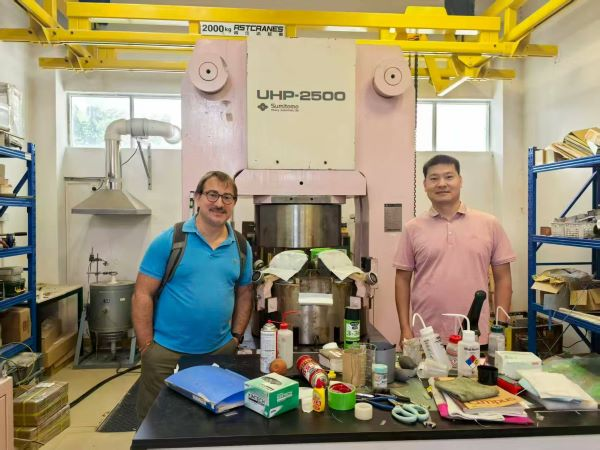
It all began in June 2021 with an invitation to contribute to a session entitled "Spotlight on oxidation state and other redox proxies from Earth's surface to core" for the European Mineralogical Conference, which was to be held in Krakow (Aug 29-Sept 2). A few days later, I was pleasantly surprised to receive a reply from a Chinese colleague working at the Guangzhou Institute of Geochemistry (GIG), thanking me for reminding him of the abstract deadline.
A few months later, I received another email from him asking for my scientific opinion on a manuscript that is of great interest to me, as it presented a very thorough and innovative way with the distribution of ferric and ferrous iron between terrestrial magmas and minerals as indicators of oxygenation conditions in the Earth's inaccessible depths. My respect and appreciation for this new methodology were such that I invited this colleague to present the results a year later in Trieste to an international audience of geoscientists all working on mantle redox – related topics. By then, our mutual respect was such that we naturally had to meet in person.
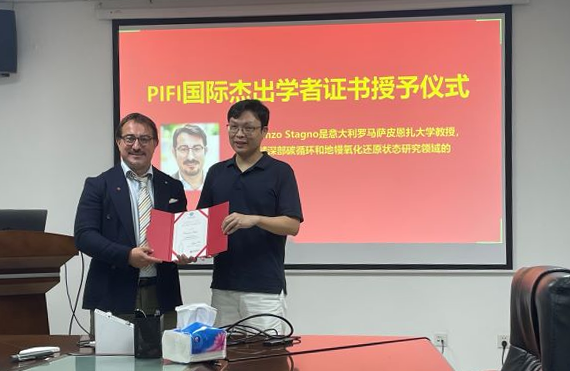
It was at this point that I was offered the opportunity to apply for a funding program promoted by the Chinese Academy of Sciences (CAS), which aims to build bridges between researchers from around the world and colleagues based in Chinese institutes and establish scientific cooperation. The President's International Fellowship Initiative, PIFI, was a wonderful opportunity to meet an excellent young scientist and a formidable person, Dr. Jintuan Wang from the GIG, CAS.
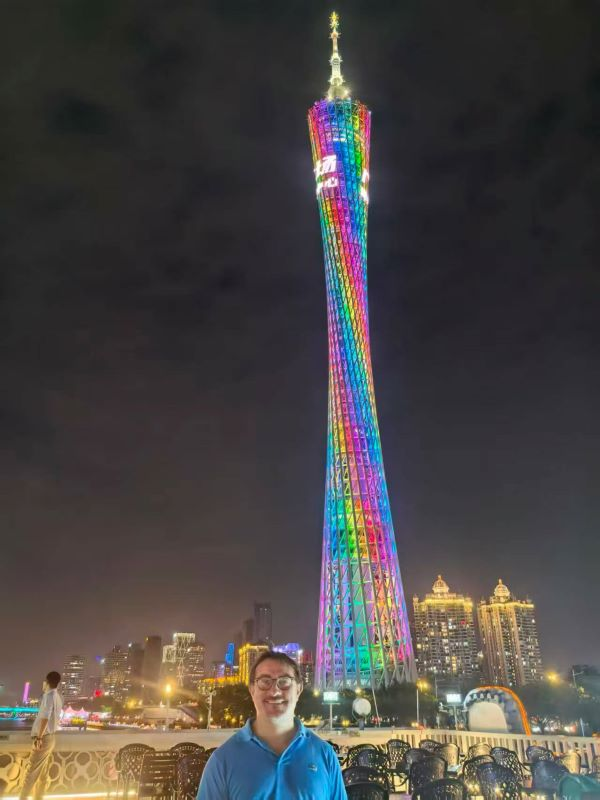
I have been collaborating with several Chinese colleagues for a long time and have visited China before, but my journey to Guangzhou last September was truly memorable.It is a marvelous city, striking for its colorfully lit skyscrapers and the Canton Tower overlooking the Pearl River. An evening stroll along the river is an enchanting immersion into the magic of this city.
In about a week, I had the privilege of giving a lecture, engaging with colleagues at the host Institution at all career stages, touring the fascinating top-level laboratories, meeting old friends there, and enjoying a social dinner together.
The exquisite food, the friendly people, the surprising natural beauty, and the world-class science — all this was captured in my first, experience in Guangzhou, and certainly not my last.
In addition, PIFI gave me the opportunity to visit another CAS institute, such as the Institute of Oceanology in Qingdao located in China's eastern Shandong province facing the Yellow Sea. There, I met another colleague of mine, Dr. Fangyi Zhang, who invited me to give a seminar and discuss the progress of our ongoing research projects.
A few days later, a scientific article was accepted for publication in a renowned petrology journal, marking the culmination of the collaboration established with Dr. Jintuan Wang and creating a bridge of collaboration between my university, Sapienza University of Rome, and the GIG, CAS, in Guangzhou.
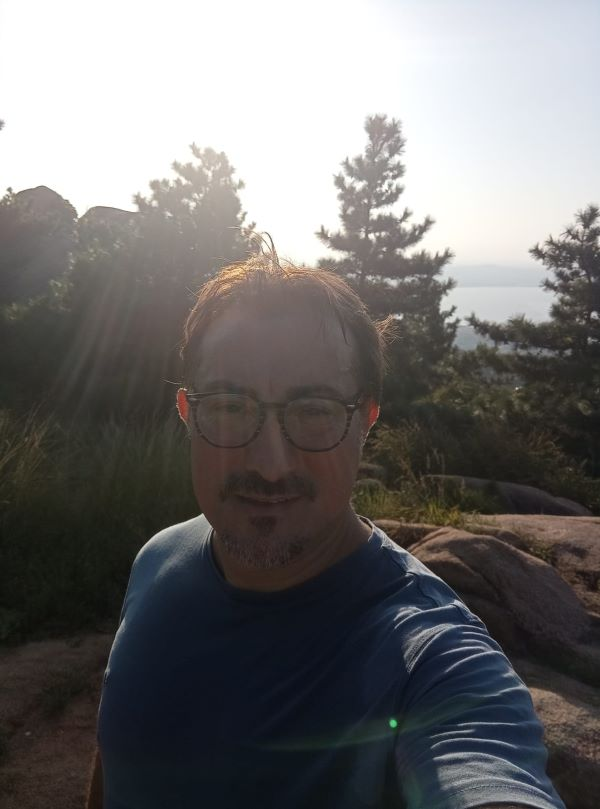
Both visits to the CAS institutes in Guangzhou and Qingdao inspired ideas for new projects, some of which will require financial support, new manuscripts, and ideas for exchange programs involving master's and doctoral students.
This PIFI visit lasted only a few days, but its impact will be long-standing. I am confident that this collaboration will yield results capable of expanding the frontiers of our knowledge in the field of petrology and mineralogy of the Earth's interior.
PIFI builds bridges between distant researchers connected by the same passion for science and promotes cultural and scientific exchanges. Thank you, PIFI, and thank you, Jintuan, for this great opportunity!
Attachment Download:
 86-20-85290281
 86-20-85290130
 intl@gig.ac.cn
 No. 511 Kehua Street, Tianhe District, Guangzhou, Guangdong, China (510640)