

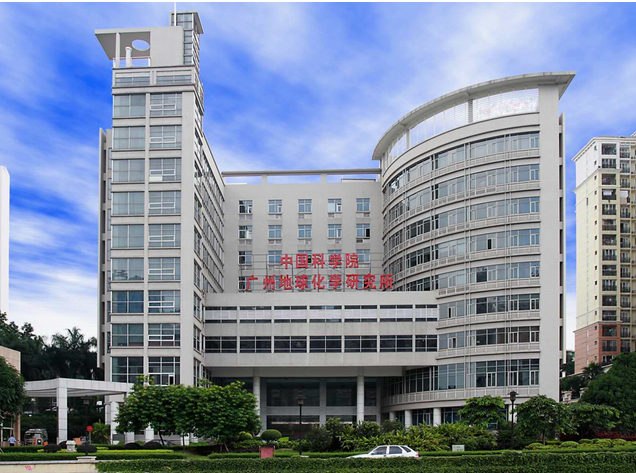
The Guangzhou Institute of Geochemistry of the Chinese Academy of Sciences (GIGCAS) is a leading research institute in earth and environmental sciences, located in Guangzhou in southern China. GIGCAS traces its origins to the Guangzhou Branch of the Institute of Geochemistry of the Chinese Academy of Sciences, founded in 1987. GIGCAS adopted its current name in 1994, and in 2002 the Changsha Institute of Geotectonics of the Chinese Academy of Sciences was integrated into GIGCAS.
GIGCAS focuses its research on two main fields: deep earth processes and critical resources, and pollution prevention and control. Particular emphasis is placed on elucidating the formation of deep-earth resources, developing efficient and environmentally-friendly technologies for prospecting and mining, and advancing environmental technologies. Dedicated to fundamental, pivotal, and forward-looking research, GIGCAS aims to develop into a world-class research institution in earth and environmental sciences. Through pioneering research in deep-earth science, supporting the sustainable exploration and utilitization of critical resources, and safeguarding environmental quality, the institute seeks to serve both scientific advancement and societal needs.
GIGCAS is home to the State Key Laboratory of Deep Earth Processes and Resources (DEEPER) and the State Key Laboratory of Advanced Environmental Technology (SKLAET). It also hosts two provincial key laboratories and two joint laboratories established in collaboration with universities in Hong Kong, providing strong platforms for interdisciplinary research and innovation.
Bringing together researchers from geochemistry, geophysics, environmental science, and related disciplines, GIGCAS maintains active international collaboration and frequent academic exchanges with research institutions worldwide. Its academic impact is also reflected in international honors and professional service within international organizations and journals. Closely connected with regional and global research communities, the institute looks forward to strengthening its international engagement and contributing to the advancement of Earth and environmental sciences in the years to come.
 86-20-85290281
 86-20-85290130
 intl@gig.ac.cn
 No. 511 Kehua Street, Tianhe District, Guangzhou, Guangdong, China (510640)